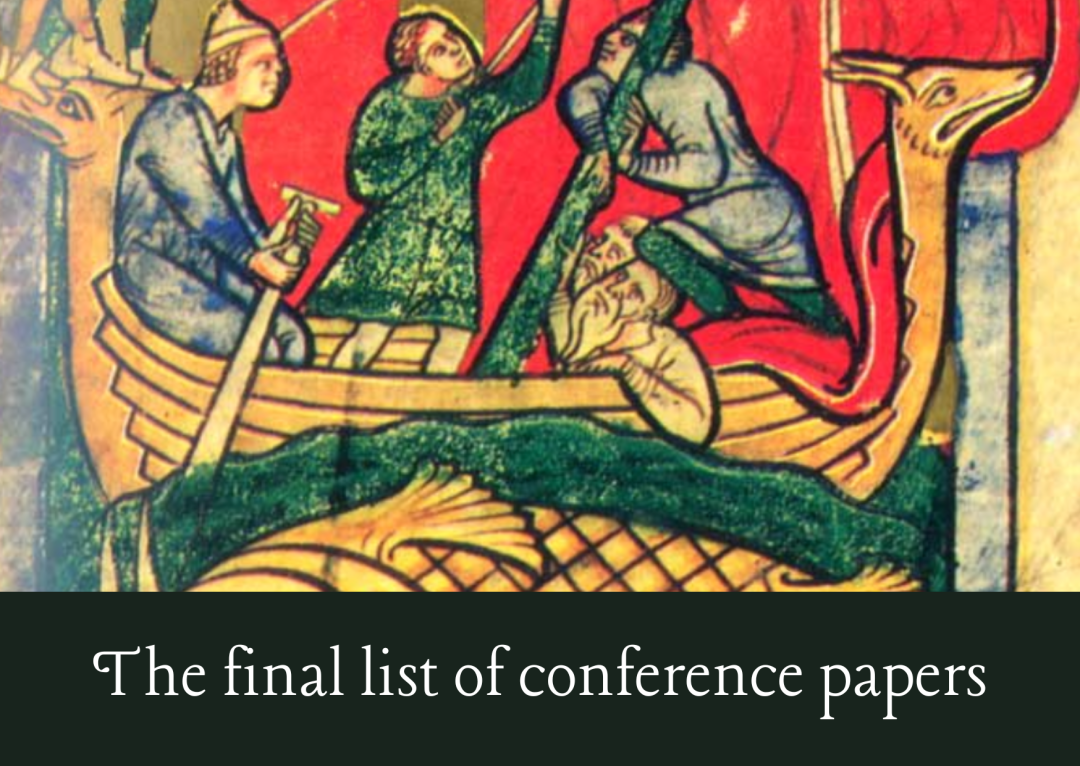
The 26th Biennial SASMARS Conference starts today at Mont Fleur, Stellenbosch. The theme, “What Lies Beneath”, have inspired a variety of papers to be delivered by local and international scholars. Professor Andrew Breeze from the University of Navarra, Spain, is joining us as the 2024 plenary speaker.
Below is a list of all the papers in the order in which they will be read during sessions on Friday, Saturday, and Sunday.
- Andrew Breeze, The Celtic Other World and Old English Orosius (University of Navarra)
- Scott Nethersole, Beneath European landscape painting: The appreciation of African coastlines in European travel accounts of the fifteenth and sixteenth centuries (Radboud University)
- Camilla Norcia, From Thessaly to North Europe: A common mythological underlying stratum (Université de Louvain)
- Mngadi, Sikhumbuzo, Subtexts: The art of Hans Holbein the Younger and the question of the ‘Modern’ in English Renaissance literature and art (University of Johannesburg)
- Lynton Boshoff, What lies beneath the text? Intertextuality with Classical texts in Carolingian poetry (North-West University)
- Muḥammad Ashraf Dockrat, Beneath wisdom, religious undertones (University of Johannesburg)
- David Scott-Macnab, Beneath the mastery: Human–animal relations and animal communication as depicted in Medieval handbooks on hunting and falconry (North-West University, Potchefstroom University)
- Richard Alan Northover, Altered states of consciousness in Medieval art and literature (University of South Africa)
- Alexander Holland, John Bromyard’s Summa Praedicantium: What lies beneath the sinner’s mask (Independent Scholar)
- Frances Ringwood, What lies beneath Satan’s skin in Paradise Lost? (University of Zululand)
- Michèle Du Plessis-Hay, ‘That gown going off…’: John Donne’s ‘To His Mistress Going to Bed’ (North-West University)
- Helena van Urk, ‘The wise would turn from the babble in the squares’: A class-based analysis of Dante’s illustrious vernacular (University of Cambridge)
- Idette Noomé, Blasphemous bluster? Abusing Scripture in Marlowe’s Doctor Faustus (University of Pretoria)
- Jac Conradie, The expression of underlying emotion in the Middle Dutch miracle/mystery play Mariken van Nieumeghen (University of Johannesburg)
- Francesca Leonardi, Beneath the skin: The embodied melancholy of a woman in the ‘Elegy of Madonna Fiammetta’ by Giovanni Boccaccio (Yale University)
- Catherine Addison, Tithonus’ death-wish in the Middle Ages and Renaissance (University of Zululand)
- Carin Marais, ‘The cauldron-liquid of the burden of the gallows’: The mythological knowledge underpinning kennings in Old Norse poetry (Independent Scholar)
- Chris Thurman, Beneath the story of Shakespeare translations in twentieth-century South Africa (University of the Witwatersrand)
- Fisokuhle Mbambo, Beneath the warrior’s exterior: What African praise poems can teach us about Sir Gawain’s bravery in Sir Gawain and the Green Knight (University of Zululand)
- Julia Fernández Cuesta, A syntactic pattern of agreement beneath -s/-th variation in Old Northumbrian? Verbal morphosyntax in Owun’s gloss to the Rushworth Gospels (University of Seville)
- Antony Goedhals, ‘St. Patrick’s Purgatory’: a source for the ‘pit of helle’ in The Parson’s Tale (University of Pretoria)
- Giacomo Berchi, The Heavens beneath: Looking downwards and upwards in Dante’s Paradiso (Yale University)
- Caitlin Ford, What lies beneath the fur: The humanity of the Medieval werewolf (North-West University)
- George King, What lies beneath: Appropriation and repurposing in sixteenth-century sacred music (UNISA)

 SASMARS